

In this interview, Maxwell Desilets sits down with Nicole Prince, an environmental engineer at North Shore with over 14 years of industry experience. In addition to her technical expertise, Nicole brings a strongly client-focused mindset to her work, emphasizing the importance of tailoring environmental solutions to each client’s specific operations, risks, and regulatory requirements.
The discussion explores Nicole’s work under Alberta’s Environmental Protection and Enhancement Act (EPEA), her experience managing soil and groundwater monitoring programs, and the unique considerations involved in projects in the Northwest Territories.
Background
Maxwell Desilets: Okay, so you’ve been with North Shore for quite a while now. Would you be willing to start by just telling us a little bit about yourself and the nature of your work here at North Shore?
Nicole Prince: I’ve been a consulting engineer for almost 14 years and have been with North Shore for almost 3 years. I graduated with a bachelor’s degree in environmental engineering from Dalhousie University, and the majority of my experience is with contaminated sites. In my current role, I work extensively with our clients to assist them with their Environmental Protection and Enhancement Act (EPEA) facility licensing obligations. For these facilities to operate, there are requirements for continued monitoring and assessment to comply with their licence requirements, and we assist with those requirements.
Maxwell Desilets: You’ve built quite a career in environmental engineering. What do you find most enjoyable and rewarding about your work here at North Shore?
Nicole Prince: I’ve really enjoyed solving problems and learning new things, especially when they’re more complex. In my experience, no two projects are the same, and each has its own set of potential problems. The faster you are at problem-solving, the more likely you are to succeed in a project. At North Shore, I enjoy both managing the EPEA projects and providing technical insight to support environmental objectives. I have also really enjoyed getting familiar with the facilities and learning how we can best support our clients’ needs to meet regulatory compliance. At the end of the day, we’re providing a service, and it’s about delivering the best service possible while constantly growing, learning, and improving.
EPEA and Regulatory Work:
Maxwell Desilets: You’ve built up quite a lot of experience in the industry. And you’ve already said a lot of your work revolves around EPEA. For those who might be a bit less familiar, what exactly is an EPEA approval and why are they such an important process for industrial operators?
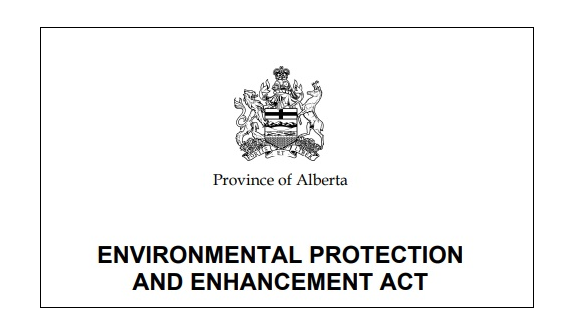
Nicole Prince: An EPEA approval is essentially a licence that allows a facility to operate, but it also comes with requirements for environmental assessment and monitoring. Those programs need to be submitted to the environmental regulatory body to ensure they meet the licence conditions.
In Alberta, the regulators we typically report to are the Alberta Energy Regulator (AER) and Alberta Environment and Protected Areas (AEPA). Most of the work we do is within Alberta, although we have also worked with regulatory bodies in other provincial jurisdictions.
For a new facility, the operator submits an application to the regulator, and if it’s approved, the facility is issued a licence to operate for ten years. For facilities that have been operating for decades, the licence must be renewed every ten years. During the renewal process, the regulator reviews any changes at the facility and looks at the overall assessment and monitoring program to determine whether it’s working effectively or if adjustments are needed.
Maxwell Desilets: Right, so from your experience, what are the most common challenges faced by clients during the renewal process?
Nicole Prince: During the renewal process, regulators are typically looking for any current or planned changes to the site or its operations, and they also review how successful the environmental monitoring programs have been over the previous approval period.
One of the more common challenges I’ve seen is not having all of the historical documentation readily available from the previous 10-year approval period. That can include monitoring records, documentation of equipment changes, or servicing records that help demonstrate how the facility has been operating over time.
Larger operational changes may also require amendments to the existing licence, or they may need to be addressed during the next renewal. Having that information well-documented and accessible makes the renewal process much smoother.
Maxwell Desilets: What are some common misconceptions that operators tend to have about EPEA approvals and the renewals?
Nicole Prince: Sometimes operators don’t fully understand why certain environmental requirements exist or why they’re necessary. Monitoring and assessment programs can be quite extensive and follow a number of environmental standards and guidelines, so it can feel bureaucratic if you’re not familiar with how those systems work.
As consultants who work with these requirements regularly, part of our role is helping bridge that gap in understanding. We can explain the requirements to operators in less technical terms while also collecting and presenting the information regulators need in the appropriate technical format.
Maxwell Desilets: Over the course of your career, how has EPEA changed? How have standards and technology evolved?
Nicole Prince: Many of the changes to groundwater assessment and reporting requirements are reflected in newer licences. In the past, groundwater sampling and reporting programs were often developed to be very site-specific, but newer licences are becoming more standardized and typically include annual surveillance monitoring and reporting requirements.
That shift toward standardization has helped improve the efficiency of reporting submissions, particularly with the introduction of the one-stop online submission tool.
We’re also seeing regulators place greater emphasis on tracking spills and operational issues at facilities. Part of our role is helping communicate those expectations to our clients so they understand the requirements and can stay ahead of them.
Soil and Groundwater Programs:
Maxwell Desilets: From a regulatory and environmental protection standpoint, what are these programs designed to achieve?
Nicole Prince: Soil and groundwater monitoring programs are designed to detect any environmental impacts that may occur on-site as a result of a facility’s operations. These types of programs used to be completed closer to the end of a facility’s life. In many cases, however, the known liabilities and what you’d expect for remediation turned out to be lower than originally anticipated during operations. Because of that, regulators now place more emphasis on conducting monitoring while facilities are still operating. The goal is to identify potential issues earlier so that mitigation and prevention programs can be implemented sooner rather than later. Today, soil monitoring programs are conducted every 5 years, while groundwater monitoring is generally conducted annually. If any impacts are identified, they can be addressed, or plans can be put in place to address them well before the facility reaches the end of its operational life.
Maxwell Desilets: How do you typically interact with soil and groundwater monitoring programs in your job?
Nicole Prince: One way I interact with soil and groundwater monitoring programs is by reviewing the facility licence requirements and making sure we’re keeping track of the various reporting deadlines. Different licences often have different submission dates, so staying organized and monitoring those timelines is an important part of keeping the programs running smoothly.
Internally, we track those submission dates to ensure the monitoring work is completed and the required reports are submitted to the regulators on time.
Maxwell Desilets: When designing a soil or groundwater program, how do site-specific conditions tend to influence all programs?
Nicole Prince: When designing a soil or groundwater monitoring program, site-specific conditions play a big role in determining what the program looks like. One of the first things we do is work with operations staff to identify whether there have been any spills or operational issues at the facility since the last monitoring program.
That information helps us identify areas that may have a higher risk of environmental impacts. Those higher-risk areas are then prioritized for investigation as part of the soil or groundwater program.
Northwest Territories:
Maxwell Desilets: You’re certified to work in the Northwest Territories, of course. And so, how does environmental work in the Northwest Territories differ from work down south?
Nicole Prince: Working in the north has its own set of challenges. There are fewer resources, different environmental factors, and socio-economic challenges to consider. The towns and cities are smaller and spread out, so finding the right people for any given job can be difficult. Environmental considerations in the north include permafrost, which can act as a confining layer at impacted sites, as well as natural factors, such as higher levels of arsenic in certain areas. Working on projects in the north also takes considerably more time due to colder temperatures and limited contractor resources. Working with First Nations Communities is also important and has its own set of dynamics to navigate.
Maxwell Desilets: How do the northern conditions, like access limitations and shorter seasons in the field, influence the planning and execution of projects?
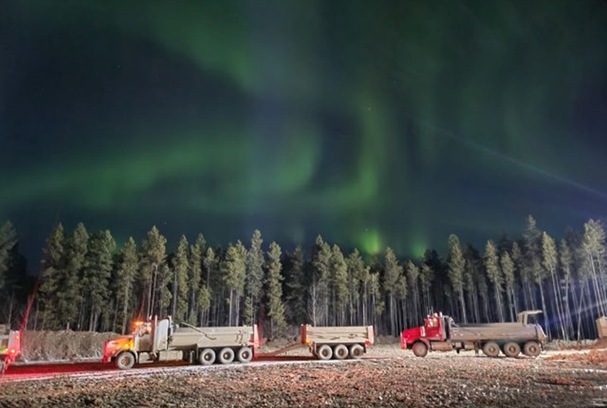
Nicole Prince: Assessment seasons are shorter in the north, and access to some communities during these times is only by plane or helicopter. Because of this, programs must be planned far in advance, and full assessment and/or remediation can take years to complete. In the north, communities rely heavily on ice roads to move and supply resources. Moving of equipment for certain remedial or environmental projects would have to occur during these times, which takes considerable planning. Spills can also occur in very remote locations due to accidents on these ice roads.
Maxwell Desilets: So, what have you found to be important when you’re interacting with First Nations communities up in the Northwest Territories? And how frequently do you have to do so?
Nicole Prince: First Nations are very important in the Northwest Territories, and consultation is a key part of working there. Community members like meeting in person and building trust with people outside their communities. They like to be involved and informed during various programs that occur in their communities. There is a lot of encouragement to employ First Nations personnel where possible and get the community involved. Consultation is not only encouraged but also required by regulatory bodies in the Northwest Territories.
Through her work with EPEA approvals, soil and groundwater monitoring programs, and projects in the Northwest Territories, Nicole brings a balanced approach that combines technical expertise with clear, practical communication. Her ability to navigate complex regulatory requirements while working closely with clients highlights the value of environmental management and thoughtful, site-specific solutions.
As environmental regulations continue to evolve and projects become increasingly complex, this kind of experience and collaboration plays a key role in helping operators meet their obligations efficiently and responsibly.